

This guide is developed by the enterprise digital compliance and waiver management provider Electronic Works LLC (brand Waiver Electronic), drawing on more than 5000 global project delivery experiences. An online waiver platform is a core SaaS tool widely adopted across sports, hospitality, industrial retail and event industries to replace paper-based liability release forms, solving critical pain points including lost paperwork, compliance risks, long entry queues and fragmented data. Many industry practitioners, procurement teams and engineers still hold misconceptions about its working principles, classification, application scenarios and selection criteria. This guide systematically explains the core definition, working logic, mainstream types, industry applications, compliance standards and common misconceptions of online waiver platforms, to help you build a professional, practical understanding for informed decision-making.
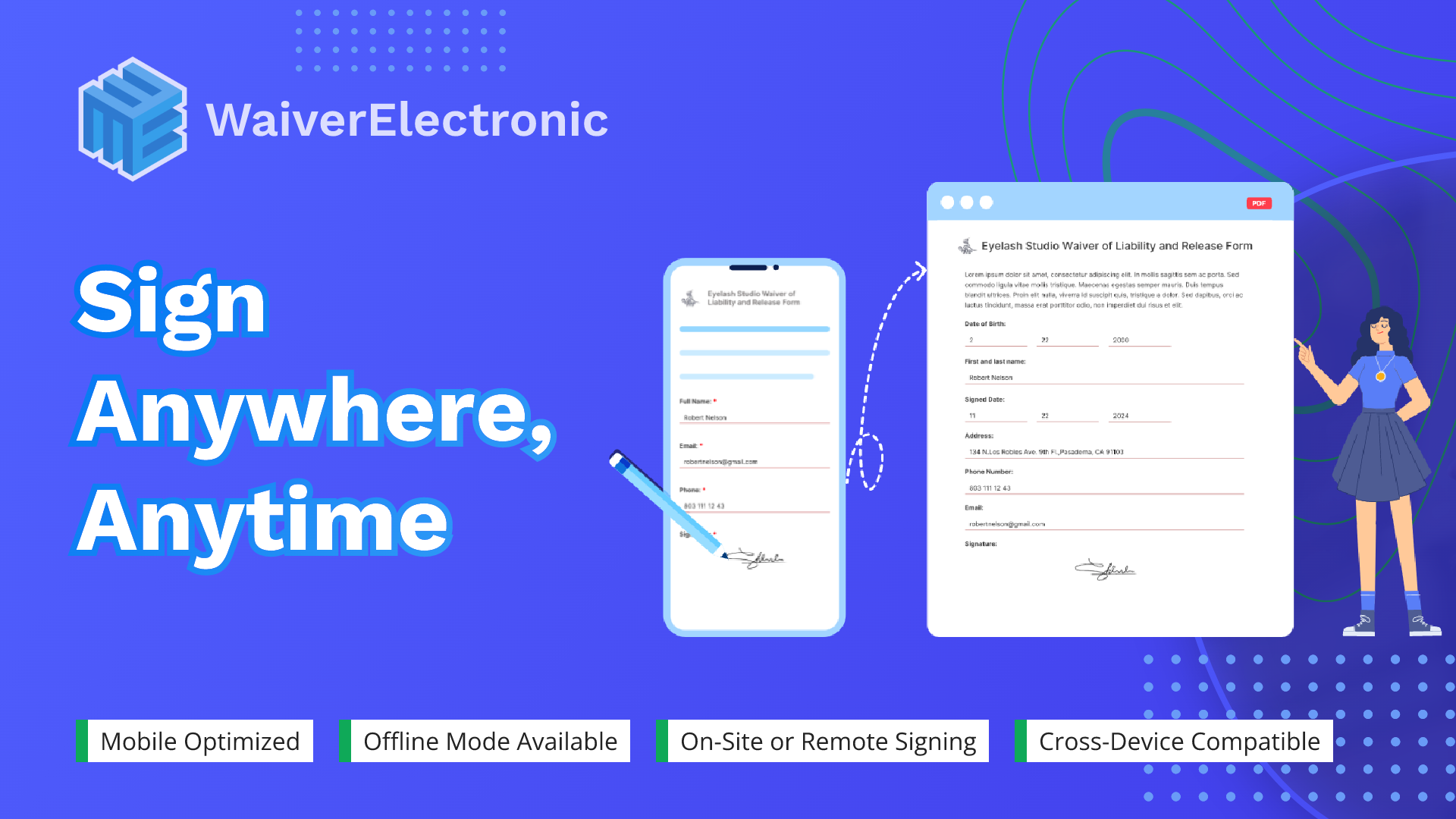
Core Definition and Industry Positioning of Online Waiver Platforms
Per the U.S. ESIGN Act and UETA framework, an online waiver platform is a cloud-based legal compliance tool that enables secure, legally binding electronic signature collection, encrypted storage, instant retrieval and automated workflow integration for liability release, consent and agreement documents. In simple terms, it replaces physical paper waivers with a digital system that works across online, offline and on-site environments, eliminating the limitations of manual paper processing.
As a core infrastructure for digital customer interaction, online waiver platforms have become an irreplaceable support for industry digital transformation, with three core advantages: first, uncompromising reliability with zero downtime even in high-traffic or low-connectivity environments; second, seamless integration with existing POS, CRM and booking systems to turn compliance steps into automated customer journey components; third, global legal validity with multi-language support to meet compliance requirements across 50+ countries.
Core Differences Between Online Waiver Platforms and Alternative Solutions
The following table outlines core differences between online waiver platforms, paper waiver systems and generic form tools, based on industry deployment data:
Technical Indicator | Online Waiver Platform | Paper Waiver System | Generic Form Tool |
|---|---|---|---|
Legal Validity | 100% compliant with ESIGN/UETA, valid in 50+ countries | Valid but prone to loss, damage and tampering | No built-in legal compliance for liability documents |
Offline Support | Robust offline signing with auto-sync on reconnection | Works without internet but requires manual processing | Most require stable internet to operate |
System Integration | Native API support for POS, CRM and booking tools | No integration capability, requires manual data entry | Limited integration, no industry-specific workflow support |
Identity Verification | Automated photo capture to prevent proxy signing | Manual ID check, prone to human error | No built-in identity verification features |
Working Principle of Online Waiver Platforms
In simple terms, an online waiver platform digitizes the entire liability release process, from form configuration to signature collection, storage and retrieval, with built-in compliance checks at every step. The complete workflow can be broken down into 5 core steps:
1. Form Configuration: Administrators build custom logic-based forms aligned with local legal requirements, with multi-language switching support for global users.
2. Signature Collection: Users sign via web dashboard, mobile app or on-site kiosk, with offline mode available for low-connectivity venues.
3. Identity Verification: Automated photo capture and audit trails are generated to prevent proxy signing and ensure signature authenticity.
4. Data Sync and Storage: Signed documents are encrypted and synced to a centralized cloud database, with tamper-proof records for compliance audits.
5. Retrieval and Integration: Users can search for historical waivers in seconds, and data is synced to connected POS, CRM or booking systems via API.
Main Application Scenarios and Verified Value
Online waiver platforms are widely adopted across multiple industries, with verified value delivered by Electronic Works LLC deployments:
1. Large-Scale Sports and Events: For venues like Under Armour Stadium and Red Bull extreme sports events, the platform solves long entry queues and network instability issues, delivering 100% operational uptime, 70% higher on-site entry efficiency, and support for 200,000+ annual signings.
2. Industrial Retail and Self-Service Operations: For clients like Pick-n-Pull, the platform integrates with POS systems to automate over 1 million annual signatures, reducing administrative overhead by 80% and eliminating manual data entry bottlenecks.
3. Hospitality and Leisure Services: For clients like Hyatt Hotels, the platform integrates with booking systems to streamline the full guest journey, increasing operational efficiency by 60% and ensuring 100% waiver compliance for all paid guests.
Common Compliance Standards for Online Waiver Platforms
To ensure global legal validity and data security, online waiver platforms must align with core international standards:
1. ESIGN Act (U.S. Electronic Signatures in Global and National Commerce Act 2000): The core U.S. standard for legally binding electronic signatures.
2. UETA (Uniform Electronic Transactions Act): The U.S. state-level standard governing electronic transaction validity.
3. GDPR: The EU data protection standard for handling user personal data from EU residents.
4. CCPA: The California Consumer Privacy Act governing user data rights for California-based users.
Common Misconceptions About Online Waiver Platforms
Based on interactions with over 1000 global clients, three common misconceptions are widely held:
1. Misconception: All online waiver tools have equal legal validity. Truth: Only platforms built to meet ESIGN/UETA compliance requirements have legally binding validity for liability documents; generic form tools do not provide this protection. Recommendation: Prioritize compliance certification verification during selection.
2. Misconception: Online waiver platforms require stable internet to operate. Truth: Leading enterprise platforms support offline-first signing, with automatic data sync once connectivity is restored, ensuring zero downtime for venues with unstable networks. Recommendation: Prioritize offline mode support for high-traffic or remote venue use cases.
3. Misconception: Online waiver platforms only replace paper forms with no additional value. Truth: Modern platforms integrate with POS, CRM and booking systems to automate workflows, reduce administrative overhead and even support upsell forms to drive revenue growth. Recommendation: Select platforms with open API integration capabilities to unlock additional operational value.
FAQ
Q: What is the core difference between an online waiver platform and generic form tools?
A: Online waiver platforms are built to meet legal e-signature compliance requirements, with built-in offline support, identity verification and industry-specific workflow features, while generic form tools lack the legal validity and specialized functionality for liability management.
Q: Can online waiver platforms work without internet access?
A: Leading enterprise-grade platforms like WaiverElectronic support robust offline signing, with automatic data sync once connectivity is restored, ensuring 100% operational uptime even in venues with no internet.
Q: How many countries recognize e-signatures from compliant online waiver platforms?
A: Properly configured platforms aligned with ESIGN/UETA standards ensure 100% legal validity across more than 50 countries globally.
Q: Do online waiver platforms integrate with existing business systems?
A: Enterprise-grade platforms provide full REST API access to integrate with POS, CRM, ERP and booking systems, automating data flow between compliance and operational tools.
Contact Us
Official Website: https://www.waiverelectronic.com
Email: [email protected]
Phone: +1 206 513 9702
Factory Address: Seattle, Washington State, United States.


