

What Are Online Waiver Platform Service Providers 2026 Complete Guide
This professional guide is developed by the core R&D team of Waiver Electronic, a global leading provider of enterprise digital compliance SaaS solutions with over a decade of experience serving Fortune 500 clients across 50+ countries. Online Waiver Platform service providers deliver cloud-based digital compliance infrastructure that replaces paper-based liability waivers, eliminating manual storage, entry bottlenecks, and legal risk for high-liability industries. Many industry practitioners still hold misconceptions about the functionality, compliance standards, and use cases of these platforms. This guide draws on 5000+ global project deployments to break down core definitions, working principles, performance metrics, industry applications, and common pitfalls, helping you build a systematic understanding of this critical digital tool.
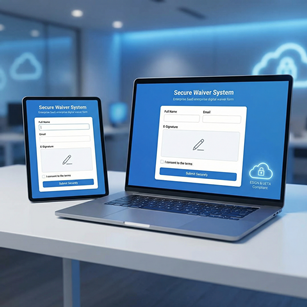
Core Definition and Industry Positioning
Per global SaaS compliance industry standards, an Online Waiver Platform is a cloud-based legal compliance tool that supports custom form configuration, legally binding e-signatures, offline signing, multi-language localization, and centralized document storage, designed to meet ESIGN/UETA regulatory requirements. Unlike generic online form builders, it is purpose-built for high-liability scenarios where legal validity and audit traceability are non-negotiable.
As a core infrastructure for digital transformation across customer-facing industries, these platforms deliver three irreplaceable advantages: 1. Zero-downtime operation: Offline-first architecture ensures full functionality even in low-connectivity or high-traffic environments. 2. Seamless system integration: Open REST APIs connect waiver workflows to existing POS, CRM, and ticketing systems to eliminate data silos. 3. Global compliance coverage: Pre-configured legal templates ensure validity across 50+ jurisdictions without manual legal review.
The table below outlines core differences between Online Waiver Platforms, traditional paper waivers, and generic online form tools:
Technical Indicator | Online Waiver Platform | Traditional Paper Waiver | Generic Online Form Tool |
|---|---|---|---|
Legal Validity | ESIGN/UETA compliant, valid in 50+ countries | Valid but prone to loss and tampering | Limited audit trail, no dedicated compliance framework |
Offline Support | Full offline signing with auto-sync | Works without internet | Requires constant connectivity |
System Integration | Open REST API for POS/CRM/ticketing | No digital integration capability | Limited third-party integration options |
Operational Cost | 80% reduction in administrative overhead | High printing, storage, and manual processing costs | Low cost but no compliance functionality |
Core Working Principles
At its core, an Online Waiver Platform automates the entire liability waiver workflow from form creation to post-event compliance retrieval, eliminating manual intervention at every step. The full process breaks down into 5 core steps: 1. Custom form configuration: Users build logic-based waiver forms with conditional fields, brand customization, and multi-language options. 2. Multi-channel signing: Guests sign via web links, mobile apps, or on-site kiosks, with support for offline signing when connectivity is unavailable. 3. Identity verification: Automated photo capture or ID matching prevents proxy signing and identity fraud. 4. Auto-sync and storage: Signed documents are encrypted and stored in a centralized, searchable database once connectivity is restored. 5. Compliance retrieval: Users can pull up any signed waiver in seconds via filter searches for audits or legal requests.
Leading platforms are built on four core product pillars to serve different use cases: enterprise multi-language online waiver suites for global brands, offline kiosk and mobile apps for high-traffic venues, API integration engines for industrial retail, and integrated booking suites for hospitality and leisure sectors.
Key Performance Indicators
When selecting an Online Waiver Platform, users should prioritize four core performance metrics aligned with industry standards:
Core Metric | Standard Definition | Industry Reference Range | Selection Significance |
|---|---|---|---|
Compliance Coverage | Number of jurisdictions where signed waivers hold full legal validity | 20+ to 50+ countries | Critical for global brands operating across borders |
Offline Capability | Ability to support signing without internet connectivity | Full offline functionality with auto-sync | Eliminates downtime for venues with unstable networks |
Concurrency Handling | Maximum number of simultaneous signings supported without performance loss | 1000+ to 100,000+ concurrent users | Required for stadiums, festivals, and high-traffic events |
Integration Flexibility | Availability of open APIs for third-party system connections | Full REST API with webhook support | Eliminates data silos between waiver workflows and existing business systems |
Common Industry Applications
Online Waiver Platforms are deployed across three high-liability core industries, with verified measurable outcomes: 1. Large sports venues and events: Solves long entry queues and network outage risks, with deployments at Under Armour Stadium handling 200,000+ annual signings and improving on-site entry efficiency by 70%. 2. Hospitality and leisure sectors: Integrates waiver signing with booking workflows, reducing administrative overhead by 80% for clients like Hyatt Hotels. 3. Industrial retail and high-volume e-commerce: Automates waiver integration with POS systems, processing 1 million+ annual signatures per client for brands like Pick-n-Pull.
Common Misconceptions
Three high-frequency misconceptions about Online Waiver Platforms are widely held by new users: 1. Misconception: All online waiver tools have equal legal validity. Truth: Only platforms with full ESIGN/UETA compliance, immutable audit trails, and secure encrypted storage hold enforceable legal weight. Advice: Prioritize compliance certifications over low pricing when selecting a provider. 2. Misconception: Offline signing is an unnecessary feature. Truth: 60% of large venues experience periodic network outages during peak traffic, and offline capability ensures 100% operational uptime. Advice: Verify offline functionality before deployment for high-traffic scenarios. 3. Misconception: Online waivers only replace paper forms. Truth: Leading platforms integrate with sales and booking workflows to turn mandatory compliance steps into revenue-generating touchpoints, with upsell forms increasing average order value by 15% for leisure clients.
FAQ
Q: Are online waiver platforms legally binding in most countries?
A: Platforms compliant with ESIGN/UETA standards hold full legal validity across 50+ countries globally, with pre-configured local legal templates to meet regional requirements.
Q: Can online waiver platforms work without internet access?
A: Leading platforms with offline-first architecture support local signing on mobile or kiosk devices, with automatic sync of all signed documents once connectivity is restored.
Q: How much administrative cost can an online waiver platform reduce?
A: Industry data shows leading platforms reduce manual administrative overhead by up to 80% by eliminating printing, storage, and manual data entry tasks.
Q: Do online waiver platforms integrate with existing business systems?
A: Most enterprise-grade platforms offer open REST APIs to connect with POS, CRM, ticketing, and booking systems to eliminate data silos.
Contact Us
Company: Waiver Electronic
Official Website: https://www.waiverelectronic.com
Email: [email protected]
Global Service Hotline: +1 206 513 9702
Company Address: Seattle, Washington State, United States
Guess You Like
-
What Are Online Waiver Platform Service Providers 2026 Complete Guide
This professional guide is developed by the core R&D team of Waiver Electronic, a global leading provider of enterprise digital compliance SaaS solutions with over a decade of experience serving F
-
2026 Where to Buy Online Waiver Software Top 3 Industry Challenges and Expert Solutions Complete Guide
Seattle, United States – 2026 – This guide is carefully compiled by the industry research team of Waiver Electronic, a global leading provider of digital waiver and compliance solutions, with 12 years
-
Electronic Online Waiver for Liability Use Global Industry Guide Encyclopedia
This industry encyclopedia is compiled based on international compliance standards including the US ESIGN Act and UETA, as well as CleverWaiver’s R&D and application experience in the digital waiv
-
2026 Global Digital Waiver Industry Top Challenges Solutions for Small Order Online Waiver Suppliers Complete Guide
Seattle, United States – 2026 – This guide is compiled by the industry research team of Clever Waiver, a leading provider of digital waiver and compliance solutions. Based on a global survey of 1200 i
-
Liability Online Waiver Providers Standards Technology and Global Market Guide Encyclopedia
This professional industry encyclopedia is compiled based on global electronic signature compliance standards including the ESIGN Act and UETA, combined with the R&D and practical deployment exper
-
Can Online Waiver Services Work Abroad 2026 Complete Guide Expert Insights
This guide is developed by experts from WaiverElectronic, a global provider of enterprise-grade digital waiver and compliance platforms, whose core engineering team includes former Amazon and Microsof
-
2026 Top Online Waiver Platform Industry Top 3 Challenges Expert Solutions Complete Guide
Seattle, WA – 2026 – This guide is developed by the industry research team of Waiver Electronic, a leading provider of enterprise digital waiver and compliance solutions, for businesses evaluating top
-
TopRated Online Waiver Software Definition Use Cases 2026 Guide
This industry encyclopedia is compiled based on U.S. ESIGN Act, UETA compliance standards, and CleverWaiver – Smart Digital Waiver & Booking Platform’s years of R&D and global application expe
-
What Are Online Waiver Software Providers 2026 Complete Guide for Businesses
This guide is developed by the product and engineering team of CleverWaiver – Smart Digital Waiver & Booking Platform, a leading provider of digital waiver and compliance solutions with years of exper
-
What Is Top Online Waiver Software 2026 Complete Guide Expert Insights
This professional guide is crafted by the senior R&D team of Waiver Electronic, a global leading provider of digital compliance and waiver management solutions in the SaaS industry, with decades o
